
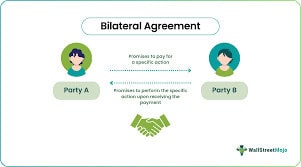
 When most people think of a contract, they picture the standard bilateral contract. In the legal world, “bi” means two, and “lateral” means sides. Therefore, a bilateral contract is an agreement where both parties exchange mutual promises to perform specific acts. In a real estate transaction, this is the most common form of agreement. The seller promises to give the parcel of land to the buyer, and the buyer promises to give a specific amount of money to the seller. The moment both parties sign the PSA in real estate, a bilateral contract is born, and the property is officially under contract.
Unlike a “unilateral” contract—where only one person makes a promise (like a reward for a lost dog)—a bilateral contract creates an immediate binding obligation on both sides. If one party fails to live up to their promise, the other party has the legal right to sue for damages or even specific performance. This mutual obligation is what gives the real estate market its stability.
The Core Elements of a Bilateral Agreement
For a bilateral contract to be enforceable in a real estate context, it must contain several key elements. Without these, the contract could be considered “void” or “voidable.”
- Offer and Acceptance: One party must make a clear offer (the “I will buy your house for $500k” PSA) and the other must accept it without changes.
- Consideration: This is the “value” being exchanged. It’s not just the purchase price; it also includes the EMD (Earnest Money Deposit) which shows the buyer is serious.
- Competent Parties: Both the buyer and seller must be of sound mind and legal age.
- Legal Purpose: You cannot have a binding bilateral contract to do something illegal, such as violating usury laws.
Bilateral Contracts vs. Option Agreements
One of the most interesting nuances in real estate is how a contract can change types. As we discussed in the previous article, an option fee creates a unilateral contract at first. The seller is obligated to sell if the buyer chooses, but the buyer is not obligated to buy. However, the moment the buyer “exercises” their option, the deal transforms into a bilateral contract. Now, both parties are locked in and must move toward the final settlement statement.
Performance and Breaches
In a bilateral contract, the timing of performance is everything. Most real estate contracts have a “time is of the essence” clause. This means that if the buyer doesn’t secure financing within the window dictated by TRID, or if the seller doesn’t disclose a latent defect they were aware of, they are in “breach” of the bilateral agreement. Because both sides made promises, both sides have skin in the game. If the seller tries to back out because they found a higher offer based on new real estate comps, the buyer can use the bilateral nature of the contract to force the sale via specific performance.
The Role of Bilateral Contracts in Commercial Real Estate
In commercial deals, bilateral contracts are often much more complex. They include promises regarding net absorption, the maintenance of T12 in real estate financial health, and the delivery of the property in a specific physical condition. An investor might promise to purchase a shopping mall only if the seller promises to finish all outstanding TI (Tenant Improvements) for new occupants. These “interdependent promises” are what make the bilateral contract the master blueprint for complex commercial developments and plottage strategies.
Conclusion
The bilateral contract is the heartbeat of the real estate industry. It is the formal “I will if you will” that turns a parcel of land into a home or an investment. By understanding that you are entering into a mutual exchange of promises, you can better prepare for your obligations and hold the other party accountable for theirs.
Before signing a bilateral agreement, ensure your PSA is reviewed by a professional. Check the real estate comps to ensure your side of the “promise” (the price) is fair. If you are an investor, make sure the seller’s promises regarding the T12 are backed up by documentation. Finally, keep a copy of the contract handy to verify every line item on the settlement statement during closing.