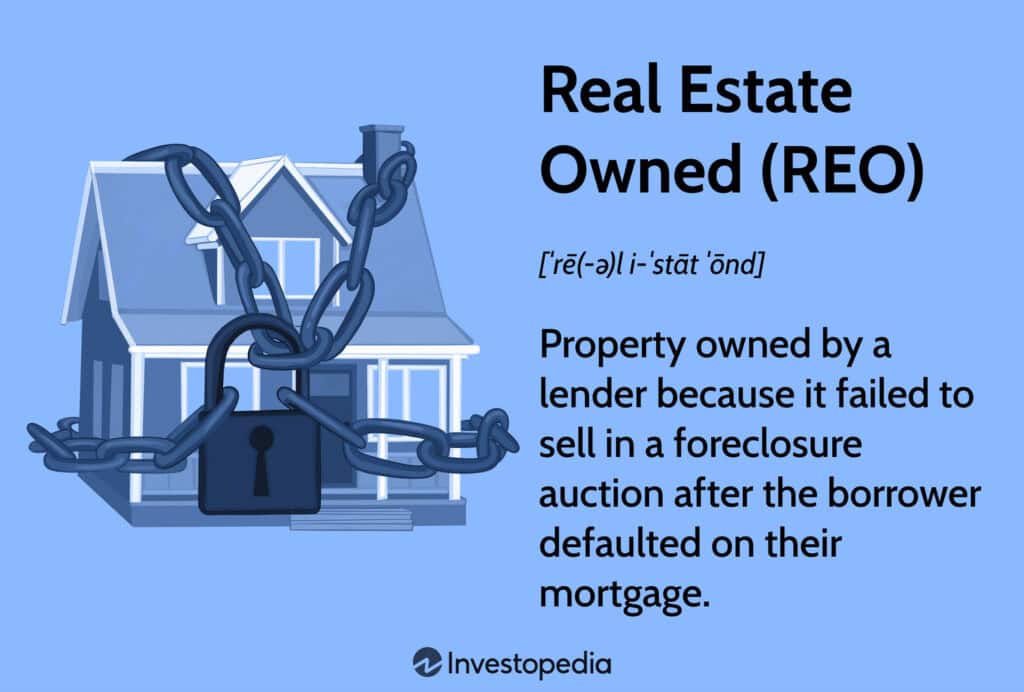
 When a homeowner stops paying their mortgage and the legal process of foreclosure is completed, the property doesn’t always sell to a third party at the courthouse steps. If the “opening bid” is not met, the lender (usually a bank) takes back the property. At this moment, the house becomes an REO, which stands for Real Estate Owned. For investors and savvy homebuyers, REOs represent a unique opportunity to purchase a property at a potential discount, but they also come with a set of rules and risks that differ significantly from a traditional home sale.
An REO is essentially an asset on a bank’s balance sheet that they generally do not want to keep. Banks are in the business of lending money, not managing a parcel of residential or commercial land. Consequently, their goal is to sell the property quickly to recover their investment. This “motivated seller” dynamic is what attracts many to the REO market, though the “as-is” nature of these sales requires a high degree of caution and professional due diligence.
The REO Life Cycle: From Default to Sale
The journey to becoming an REO is often long and complex. It begins with a default, followed by a series of legal notices, and usually ends with a public auction. If no one buys the home at the auction for the amount the bank is owed, the bank becomes the owner. At this point, the bank’s “REO Department” or an “Asset Management Company” takes over. They will typically hire a local real estate agent to list the property on the MLS, often after ordering a BPO (Broker Price Opinion) to determine a competitive market price.
Before the house hits the market, the bank may clear out trash, perform a basic “lock change,” and sometimes address safety issues. However, they rarely do major renovations. They want the property under contract as fast as possible to stop the bleeding of taxes, insurance, and maintenance costs.
Pros and Cons of Buying an REO
Buying from a bank is a sterile, business-like transaction. There are no emotional sellers to deal with, but there is also no one to tell you the history of the home. Here is a breakdown of what to expect:
- Advantage: Clear Title. Banks generally clear any liens or back taxes before selling an REO. You are much less likely to encounter a surprise escheat claim or a hidden IRS lien than you are at a foreclosure auction.
- Advantage: Potential Discount. While banks want a fair price, they are often more willing to negotiate than a homeowner who has a specific “bottom line” to meet.
- Disadvantage: “As-Is” Condition. This is the biggest risk. The bank has never lived in the house. They will not disclose a latent defect because they literally don’t know it exists.
- Disadvantage: Bureaucracy. Offers must be approved by committee, which can take days or even weeks. The PSA will likely be on the bank’s own specific forms, which are heavily weighted in the bank’s favor.
[Image: A ‘For Sale’ sign in front of a slightly neglected house with a ‘Bank Owned’ or ‘REO’ banner across the top]
The Importance of the REO Inspection
Because you are buying “as-is,” your inspection period is your only shield. You must look for signs of structural failure, mold, or plumbing issues that the bank hasn’t disclosed. In some cases, previous owners who were angry about the foreclosure might have intentionally damaged the property, such as pouring concrete down the drains or removing all the fixtures. A thorough inspection helps you calculate the “After Repair Value” (ARV) so you can ensure your offer aligns with real estate comps in the area.
Additionally, you should check for any special assessments or municipal fines that might be attached to the property. While the bank clears major liens, smaller “nuisance liens” for tall grass or snow removal may still be lurking. Reviewing the settlement statement carefully before closing is essential to ensure you aren’t inheriting any of these costs.
Financing an REO: Challenges to Consider
Many REOs are in “rough” shape, which can make traditional financing difficult. If the home is missing a kitchen or has a hole in the roof, it might not qualify for a standard FHA or VA loan because it doesn’t meet the “minimum property standards.” In these cases, buyers often use cash, hard money loans, or renovation loans (like the FHA 203k). Before you get too far along, make sure your lender is aware that you are buying an REO and has reviewed the property’s condition.
Furthermore, banks will often require a POF (Proof of Funds) or a very strong pre-approval letter before they even look at your offer. They have already been through one failed loan with this property; they won’t risk another deal falling through during the TRID disclosure period.
Conclusion
An REO (Real Estate Owned) property can be a diamond in the rough or a financial pitfall. Success in the REO market requires a shift in mindset: you are dealing with a corporation, not a neighbor. By performing a rigorous title search, hiring the best inspectors, and knowing your numbers, you can find incredible value in these bank-owned assets.
Ready to start your search? Be sure to understand real estate comps so you don’t overpay. If you’re looking at a larger REO investment, check out our guide on T12 in real estate to analyze the potential income. And as you head to closing, make sure you understand every line of your settlement statement in real estate to ensure a smooth transition of ownership.