
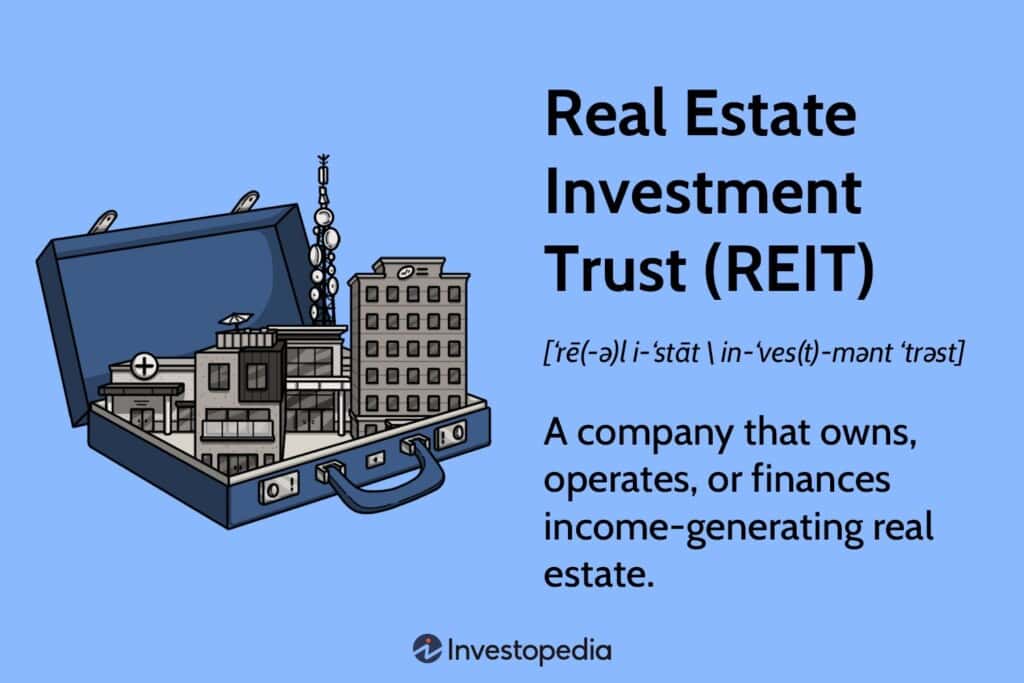
 Not everyone has the millions of dollars required to buy an office tower or a massive data center. However, almost anyone can own a “piece” of those high-performing assets through a REIT, or Real Estate Investment Trust. Created by Congress in 1960, REITs were designed to give individual investors the same access to large-scale, income-producing real estate that was previously only available to institutional hedge funds and wealthy families.
A REIT is essentially a company that owns, operates, or finances income-generating real estate. Modeled after mutual funds, REITs pool the capital of numerous investors to purchase a diverse portfolio of properties. The most attractive feature? By law, REITs must distribute at least 90% of their taxable income to shareholders in the form of dividends.
The Three Main Categories of REITs
To understand where your money is going, you first need to identify the type of REIT you are investing in. They are generally grouped by what they own or how they are traded.
1. Equity REITs
This is the most common type. These trusts buy and manage physical properties—think shopping malls, apartment complexes, and warehouses. Their revenue comes primarily from rent. For an investor, these provide both dividend income and potential capital appreciation as the value of the parcel grows over time.
2. Mortgage REITs (mREITs)
Instead of owning the buildings, these REITs provide financing for real estate by purchasing or originating mortgages and mortgage-backed securities. They earn income from the interest on these loans. These are highly sensitive to interest rate changes and carry a different risk profile than equity REITs.
3. Hybrid REITs
As the name suggests, these use a mix of both strategies. They own physical property while also holding mortgage-backed securities to diversify their income streams.
Sectors Within the REIT Market
One of the best ways to use REITs is for “niche” exposure. You can choose to invest in specific sectors based on economic trends:
- Industrial REITs: Focus on warehouses and distribution centers (think Amazon hubs).
- Retail REITs: Own malls and grocery-anchored shopping centers.
- Healthcare REITs: Own hospitals, senior housing, and medical offices.
- Residential REITs: Manage large SFH portfolios or multi-family apartment buildings.
Why Invest in a REIT vs. Physical Real Estate?
While many investors love the idea of owning a physical rental house, REITs offer several distinct advantages that are hard to beat:
Liquidity
If you own a physical parcel and need cash tomorrow, you are out of luck. It takes months to sell a house. Publicly traded REITs, however, can be sold on the stock market with the click of a button. They provide “real estate exposure with stock market liquidity.”
Professional Management
In a REIT, you aren’t the one dealing with latent defects or late-night plumbing emergencies. Professional asset managers handle the leasing, maintenance, and net absorption strategies. You simply collect the dividend check.
Low Barrier to Entry
Buying a physical property requires a massive EMD and a down payment. You can buy shares in a REIT for the price of a single share of stock, allowing you to build a real estate portfolio with just a few hundred dollars.
Tax Implications: What You Need to Know
REIT dividends are usually taxed as ordinary income rather than the lower “qualified dividend” rate. However, under current tax laws, many investors can deduct 20% of their REIT dividend income through the Section 199A deduction. It is always wise to review your settlement statement and financial records with a tax pro before making major shifts.
REITs vs. DSTs
Investors often compare REITs to a DST (Delaware Statutory Trust). The main difference is the 1031 exchange. While you can use a DST to defer capital gains taxes from the sale of a property, you generally cannot do this with a REIT. REITs are for liquid, cash-based investing, while DSTs are for tax-deferred wealth preservation.
Conclusion
REITs have democratized the real estate industry. They allow the average person to profit from the same skyscrapers and logistics hubs that power the global economy. By providing high dividends and easy liquidity, they are an essential component of a diversified investment portfolio.
Before you invest, make sure you understand the underlying assets. Are they under contract for long-term leases? What is the zoning status of their primary holdings? Knowledge is the best protection for your capital.