
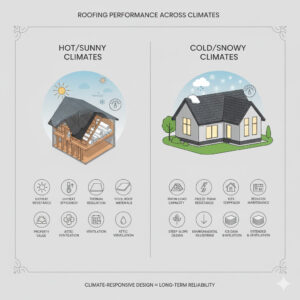
Roofing performance is closely tied to the climate in which a home is located. While roofing systems are designed to provide general protection, their effectiveness and longevity depend on how well they respond to local environmental conditions. Temperature extremes, precipitation patterns, wind exposure, and sunlight intensity all influence how roofing materials and systems perform over time.
Understanding the key factors that affect roofing performance across different climates helps explain why certain roofing approaches are more common in specific regions. Climate-responsive design and material selection play a central role in ensuring that roofs continue to protect homes reliably under varying environmental pressures.
Temperature Extremes and Thermal Movement
Temperature variation is one of the most influential factors affecting roofing performance. In regions with wide temperature swings, roofing materials expand and contract repeatedly.
This thermal movement can stress fasteners, seams, and joints. Materials that accommodate expansion and contraction tend to perform more consistently in such environments.
Roofing systems must be designed to manage thermal stress without compromising integrity.
Solar Exposure and Ultraviolet Radiation
Sunlight intensity and duration directly affect roofing materials. Prolonged exposure to ultraviolet radiation can degrade surfaces, leading to brittleness or fading.
In hot and sunny climates, roofs are exposed to higher levels of UV stress throughout the year.
Material resistance to solar exposure plays a key role in maintaining long-term performance.
Rainfall Frequency and Moisture Management
In regions with frequent rainfall, roofing systems must manage consistent moisture exposure. Effective water shedding and drainage are essential.
Roof slope, material overlap, and drainage components influence how quickly water is directed away from the structure.
Persistent moisture can accelerate wear if not properly managed.
Snow Accumulation and Freeze-Thaw Cycles
Cold climates introduce unique challenges related to snow and ice. Snow accumulation increases structural load, while freeze-thaw cycles stress roofing materials.
As snow melts and refreezes, water can penetrate small gaps and expand, causing damage.
Roof design and material resilience are critical in managing these conditions.
Wind Exposure and Uplift Forces
Wind intensity varies by location and terrain. Coastal and open areas often experience stronger and more consistent winds.
Wind creates uplift forces that can loosen or displace roofing components.
Fastening methods, edge detailing, and material weight influence wind resistance.
Humidity Levels and Moisture Retention
High-humidity environments affect roofing performance by increasing moisture retention. Prolonged dampness can promote material deterioration.
Ventilation plays an important role in managing moisture beneath the roof surface.
Roofing systems must balance external moisture resistance with internal airflow.
Roof Slope and Climate Interaction
Roof slope influences how roofs perform under different climate conditions. Steeper slopes shed water and snow more efficiently.
Low-slope roofs require specialized materials and drainage strategies, particularly in wet or snowy climates.
Slope selection is closely linked to climate responsiveness.
Material Compatibility With Local Conditions
Not all roofing materials perform equally in every climate. Some materials handle heat well but respond poorly to cold or moisture.
Material compatibility with local weather patterns affects durability and maintenance needs.
Regional preferences often reflect long-term performance experience.
Ventilation and Heat Management
Ventilation supports roofing performance by regulating temperature and moisture levels.
In hot climates, ventilation helps release trapped heat. In cold climates, it reduces condensation risk.
Balanced ventilation contributes to consistent roof behavior across seasons.
Storm Frequency and Weather Intensity
Regions prone to storms place additional demands on roofing systems. Heavy rain, hail, or high winds test roof resilience.
Roof design must account for both typical weather and extreme events.
Performance during severe conditions is a key indicator of roof reliability.
Salt Air and Environmental Contaminants
Coastal climates introduce salt exposure, which can accelerate corrosion and material degradation.
Airborne pollutants and organic matter also influence surface wear.
Material resistance to contaminants supports longer service life.
Roof Color and Heat Absorption
Roof color affects heat absorption and surface temperature. Darker surfaces absorb more heat, while lighter surfaces reflect sunlight.
Color selection influences thermal performance, especially in warm climates.
This factor interacts with insulation and ventilation strategies.
Drainage System Design and Capacity
Drainage capacity must match local precipitation patterns. Heavy rainfall regions require robust drainage systems.
Insufficient drainage can lead to standing water and accelerated wear.
Drainage design is a climate-sensitive performance factor.
Maintenance Demands by Climate
Climate affects how often roofs require inspection and maintenance. Harsh conditions accelerate wear.
Understanding climate-specific maintenance needs supports proactive care.
Maintenance frequency influences long-term performance outcomes.
Adaptability to Seasonal Variation
Some climates experience dramatic seasonal shifts. Roofing systems must adapt to both hot and cold conditions.
Materials and design that perform well year-round reduce stress and deterioration.
Adaptability supports consistent performance across seasons.
Common Climate Factors That Influence Roofing Performance
- Temperature extremes and thermal movement
- Sun exposure and ultraviolet radiation
- Rainfall and moisture frequency
- Snow load and freeze-thaw cycles
- Wind exposure and uplift forces
- Humidity and internal moisture control
- Storm intensity and environmental contaminants
Conclusion
Roofing performance across different climates is shaped by a complex interaction of temperature, moisture, wind, and environmental exposure. No single roofing solution performs identically in all regions. By understanding the key factors that influence roof behavior in specific climates, it becomes clear why climate-responsive design, material selection, and maintenance practices are essential to long-term roof reliability and home protection.