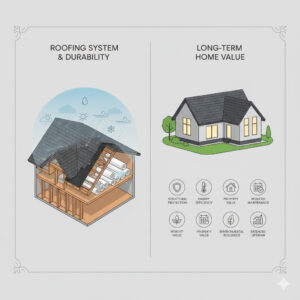
Roofing plays a fundamental role in both the physical durability of a home and how its value is perceived over time. While roofs are often discussed in terms of materials or age, their broader impact extends to structural protection, interior conditions, and long-term property performance. A roof functions as a system that supports the entire building, influencing how well a home withstands environmental exposure and maintains usability.
Understanding the role of roofing in overall home durability and value helps clarify why roofing decisions are often viewed as long-term investments rather than short-term upgrades. The condition and performance of a roof shape both daily living experience and future property considerations.
Roofing as a Core Component of the Building Envelope
The roof is a central part of the building envelope, working alongside walls, windows, and foundations to protect the interior.
By managing water, heat, and air movement, roofing systems help preserve structural components beneath them.
This protective function directly contributes to a home’s long-term durability.
Protection of Structural Elements
A well-performing roof shields framing, decking, insulation, and interior finishes from moisture intrusion.
Prolonged exposure to water can weaken structural materials and lead to costly repairs.
Roofing durability is closely tied to the overall structural health of a home.
Influence on Interior Conditions
Roofing affects indoor environments by regulating heat transfer and moisture movement.
Effective roofing systems help maintain stable temperatures and reduce humidity-related issues.
These conditions support both comfort and material longevity inside the home.
Energy Performance and Efficiency Interaction
Roofing contributes to how efficiently a home manages energy. Insulation, ventilation, and surface characteristics influence heat gain and loss.
By supporting stable indoor temperatures, roofing systems reduce stress on heating and cooling systems.
Energy performance is increasingly linked to perceptions of home durability.
Resistance to Environmental Stress Over Time
Homes are continuously exposed to sun, wind, rain, and temperature changes. Roofing systems absorb much of this stress.
Materials and design choices influence how well a roof resists gradual wear.
Consistent resistance to environmental forces supports long-term durability.
Roof Condition and Maintenance History
The visible condition of a roof often reflects overall home care. Signs of neglect may suggest broader maintenance issues.
Regular upkeep supports sustained roof performance and prevents secondary damage.
Maintenance history contributes to how durability is evaluated over time.
Roofing and Risk Reduction
Roofing plays a role in reducing risks associated with leaks, mold, and structural damage.
By preventing water intrusion, roofing systems help avoid cascading issues.
Risk reduction supports both physical durability and long-term property stability.
Impact on Perceived Property Value
Roofing influences how a home is perceived by occupants and future stakeholders.
A well-maintained roof suggests reliability and reduces uncertainty about future repairs.
This perception contributes to overall property value.
Longevity and Replacement Timing
The expected lifespan of a roof affects long-term planning and value considerations.
Homes with roofs nearing the end of service life may be viewed differently than those with newer systems.
Longevity influences both durability assessment and financial expectations.
Roof Design and Architectural Integrity
Roof design contributes to architectural cohesion and visual balance.
Consistency between roof form and building style supports perceived quality.
Architectural integrity is often linked to perceived long-term value.
Weather Resilience and Property Stability
Roofing systems influence how well a home withstands severe weather events.
Resilient roofs help protect the structure during storms and environmental extremes.
Weather resilience supports both durability and confidence in property performance.
Integration With Drainage and Exterior Systems
Roofing works in coordination with gutters, downspouts, and exterior surfaces.
Proper integration directs water away from foundations and walls.
This coordination supports overall building durability.
Long-Term Cost Management
Roof performance affects long-term costs associated with repairs and interior damage.
Durable roofing systems reduce the frequency and severity of related expenses.
Cost management is an indirect but important aspect of property value.
Roofing and Building Lifespan Alignment
Roofing choices should align with the intended lifespan of the home.
Materials and design influence how often major replacements are required.
Alignment supports consistent durability across building components.
Environmental Exposure and Aging Patterns
Roof aging reflects cumulative environmental exposure.
Understanding aging patterns helps anticipate maintenance and replacement needs.
This awareness supports long-term durability planning.
Common Ways Roofing Supports Home Durability and Value
- Protecting structural and interior components
- Managing moisture and environmental exposure
- Supporting energy efficiency and comfort
- Reducing risk of long-term damage
- Influencing perceived reliability and upkeep
- Aligning with architectural and design integrity
Conclusion
Roofing plays a central role in shaping both the durability and perceived value of a home. By protecting structural elements, supporting interior comfort, and managing environmental exposure, roofing systems contribute to long-term building performance. Understanding this role highlights why roofing decisions extend beyond immediate protection, influencing how homes age, perform, and are valued over time.