
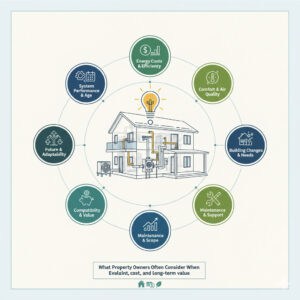
Evaluating an HVAC system upgrade is rarely a simple decision for property owners. Heating and cooling systems represent long-term investments that affect comfort, energy use, and overall building performance. When systems begin to age or no longer meet changing needs, owners often weigh a wide range of practical, financial, and operational considerations before moving forward.
Rather than focusing on a single factor, most property owners evaluate HVAC upgrades through a broader lens. Performance expectations, building characteristics, and long-term implications all play a role in shaping upgrade decisions.
Current System Performance and Reliability
The starting point for many upgrade evaluations is how well the existing system performs. Inconsistent temperatures, uneven airflow, or frequent breakdowns often prompt owners to reassess their equipment.
Reliability concerns extend beyond comfort. Systems that require repeated repairs may disrupt daily routines and increase operating uncertainty.
Performance issues help owners determine whether continued maintenance is practical or if an upgrade warrants consideration.
Age of Existing Equipment
System age is a common reference point during upgrade discussions. As HVAC equipment ages, components experience wear that can reduce efficiency and reliability.
Older systems may still function, but they often operate less efficiently than newer designs. Owners consider how remaining service life compares to potential benefits of upgrading.
Age alone does not dictate replacement, but it influences long-term planning.
Energy Consumption and Operating Costs
Energy use is a central concern for property owners. Heating and cooling typically account for a significant portion of utility expenses.
Owners often review energy bills to understand how much power their HVAC system consumes across seasons. Rising costs may signal declining efficiency.
Operating cost analysis helps owners evaluate whether an upgrade could support more predictable energy use over time.
Comfort Expectations and Indoor Conditions
Comfort plays a key role in upgrade decisions. Owners assess whether the current system maintains consistent temperatures and acceptable humidity levels.
Uneven comfort between rooms or floors may indicate limitations in system capacity or distribution.
Improving comfort outcomes is often a motivating factor when considering upgrades.
Building Size, Layout, and Usage Patterns
Changes in how a property is used can influence HVAC upgrade needs. Additions, renovations, or changes in occupancy patterns affect heating and cooling demand.
Owners consider whether existing systems still match the building’s size and layout. Systems designed for earlier configurations may struggle to meet new demands.
Usage patterns, such as extended operating hours, also factor into upgrade evaluations.
Compatibility With Existing Infrastructure
HVAC upgrades must align with existing infrastructure. Ductwork, electrical capacity, and structural constraints influence what options are feasible.
Owners often consider whether upgrades can integrate with current systems or require broader modifications.
Compatibility assessments help clarify the scope of potential upgrades.
Maintenance Requirements and Long-Term Support
Maintenance expectations shape how owners view upgrades. Systems that require frequent servicing or specialized parts may increase long-term effort.
Owners often evaluate whether newer systems offer simpler maintenance or improved access for routine tasks.
Long-term support considerations influence how manageable an upgraded system will be over time.
Noise Levels and Operational Impact
Operational noise can affect comfort, particularly in residential or mixed-use properties. Older systems may produce noticeable sound during operation.
Owners often consider whether an upgrade could reduce noise levels and improve overall indoor experience.
Quiet operation becomes increasingly important in modern living and working environments.
Environmental and Efficiency Considerations
Environmental awareness influences many upgrade decisions. Owners may consider how system efficiency affects overall energy use and environmental impact.
Efficiency considerations also relate to long-term resource use rather than immediate performance alone.
These factors increasingly shape how owners evaluate modernization efforts.
Regulatory and Compliance Factors
Building codes and regulations can influence upgrade timing. Changes in efficiency standards or safety requirements may affect system viability.
Owners often consider whether existing systems meet current regulatory expectations.
Compliance considerations help guide future-proof planning.
Budget Planning and Financial Flexibility
Budget considerations are central to upgrade evaluations. Owners assess upfront costs alongside long-term operating implications.
Financial flexibility influences how upgrades are phased or prioritized.
Budget planning helps owners align upgrade decisions with broader property goals.
Long-Term Property Goals and Value
HVAC upgrades are often considered within the context of long-term property objectives. Owners may plan improvements to support extended occupancy, resale, or operational stability.
System reliability and comfort contribute to overall property usability.
Long-term goals influence how owners view the timing and scale of upgrades.
Adaptability and Future Needs
Owners often consider how adaptable upgraded systems will be. Changing climates, usage patterns, or building modifications may affect future requirements.
Systems that can accommodate adjustments support longer-term relevance.
Adaptability becomes part of risk management in upgrade planning.
Common Considerations When Evaluating HVAC Upgrades
- Current system performance and reliability
- Age and remaining service life of equipment
- Energy consumption and operating costs
- Comfort consistency and indoor conditions
- Building layout and usage changes
- Infrastructure compatibility and scope of work
- Maintenance effort and long-term support
- Budget alignment and long-term property goals
Conclusion
When evaluating HVAC system upgrades, property owners consider a broad range of factors that extend beyond equipment replacement alone. Performance, comfort, energy use, infrastructure compatibility, and long-term objectives all influence decision-making. By weighing these considerations together, owners aim to make informed choices that support consistent indoor conditions, manageable operating costs, and long-term property performance.