
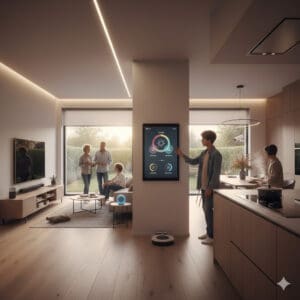
Smart home systems have gradually moved from novelty to everyday feature in many residential properties. Rather than focusing on futuristic appeal, these systems increasingly shape how people experience comfort and convenience in their daily lives. From climate control to lighting and security, smart technologies influence how homes respond to occupants’ needs with minimal manual effort.
Understanding how smart home systems affect comfort and convenience requires looking beyond individual devices. It involves examining how interconnected technologies work together to support smoother routines, greater control, and more responsive living environments.
The Concept of Comfort in Modern Homes
Comfort in residential settings extends beyond physical temperature. It includes lighting levels, noise management, air quality, and the ability to adapt spaces to changing needs.
Smart home systems influence comfort by allowing homeowners to fine-tune these elements more precisely. Automated adjustments reduce the need for constant manual intervention.
This shift reflects a broader move toward homes that adapt to occupants rather than requiring occupants to adapt to the home.
Climate Control and Personalized Environments
One of the most visible impacts of smart home systems is on climate control. Smart thermostats and connected HVAC controls allow temperature settings to respond to schedules, occupancy, and environmental conditions.
Rather than maintaining a fixed setting, systems can adjust throughout the day, supporting comfort during active hours and conserving energy when spaces are unoccupied.
This responsiveness contributes to a more consistent indoor experience without constant adjustment.
Lighting Automation and Visual Comfort
Lighting plays a significant role in residential comfort. Smart lighting systems allow users to adjust brightness, color temperature, and timing based on activity and time of day.
Automated lighting can reduce glare, enhance visibility, and create calmer evening environments. These adjustments support both physical comfort and visual ease.
Convenience is enhanced when lighting responds automatically rather than requiring manual switching.
Convenience Through Centralized Control
Smart home systems often centralize control of multiple functions into a single interface. Heating, lighting, security, and appliances can be managed through one platform.
This consolidation reduces complexity. Instead of interacting with separate controls, occupants manage home functions through unified dashboards or preset routines.
Centralized control supports convenience by simplifying daily interactions with household systems.
Automation and Daily Routines
Automation allows homes to respond to predictable routines. Morning and evening sequences can adjust lighting, temperature, and devices automatically.
By reducing repetitive tasks, automation supports smoother transitions between activities. This can be especially noticeable during busy periods.
Convenience emerges not from individual actions but from systems working quietly in the background.
Smart Devices and Adaptive Behavior
Many smart home systems incorporate learning capabilities that adapt over time. These systems observe usage patterns and adjust settings accordingly.
Adaptive behavior reduces the need for manual fine-tuning. Over time, systems align more closely with occupant preferences.
This adaptability contributes to both comfort and ease of use.
Voice and Remote Interaction
Voice assistants and mobile applications have expanded how occupants interact with their homes. Voice commands allow hands-free control of multiple functions.
Remote access enables adjustments even when occupants are away. Temperature, lighting, or system status can be managed from outside the home.
These interaction methods increase convenience by extending control beyond physical presence.
Comfort Through Predictability and Consistency
Smart systems contribute to comfort by maintaining predictable environments. Automated schedules reduce sudden changes in temperature or lighting.
Consistency supports relaxation and routine, particularly in shared households where preferences may vary.
Predictable operation reduces friction and improves overall living experience.
Integration of Multiple Home Systems
The influence of smart home systems is amplified when devices work together. Climate, lighting, shading, and security systems can respond collectively to specific conditions.
For example, entering the home may trigger lighting, temperature adjustments, and security changes simultaneously.
This integration enhances convenience by coordinating responses rather than requiring separate actions.
Reducing Cognitive Load in Daily Living
Convenience is not only about speed but also mental effort. Smart home systems reduce the number of decisions occupants must make throughout the day.
Automated adjustments handle routine environmental management, freeing attention for other tasks.
This reduction in cognitive load contributes to a calmer and more manageable living environment.
Accessibility and Ease of Use
Smart home systems can improve accessibility by simplifying control of household functions. Voice commands and automated responses support individuals with mobility or dexterity limitations.
Ease of use enhances comfort by reducing physical effort required to manage the home.
Accessibility considerations broaden the role of smart systems beyond convenience alone.
Energy Awareness and Comfort Balance
Smart systems often provide feedback on energy use, allowing occupants to balance comfort with efficiency.
By adjusting settings intelligently, homes can maintain comfort without unnecessary energy consumption.
This balance supports both physical comfort and responsible resource use.
Security and Peace of Mind as Comfort Factors
Comfort also includes emotional security. Smart security systems contribute to peace of mind through monitoring, alerts, and remote access.
Knowing the status of doors, cameras, or alarms supports a sense of control.
This emotional comfort complements physical comfort within the home.
Limitations and Learning Curves
While smart home systems offer benefits, they also introduce learning requirements. Initial setup and configuration may require adjustment.
Comfort and convenience increase as occupants become familiar with system behavior.
Understanding limitations helps set realistic expectations.
Common Ways Smart Home Systems Influence Comfort and Convenience
- Personalized temperature and lighting control
- Automation of daily routines
- Centralized management of home systems
- Reduced manual effort and repetitive tasks
- Remote and voice-based interaction
- Consistent and predictable indoor environments
Conclusion
Smart home systems influence comfort and convenience by reshaping how residential environments respond to occupants. Through automation, integration, and centralized control, these systems reduce manual effort while supporting more personalized living conditions. Rather than replacing traditional comforts, smart technologies enhance them, contributing to homes that feel more responsive, manageable, and aligned with everyday routines.